On This Ground: Hardship and Hope at the Toughest Prep School in America, by Anthony DePalma
On This Ground
By Anthony DePalma
Published by Harper Collins, 2026. 249 pages
Reviewed by Hank Bitten, NJCSS Executive Director
The first pages of On This Ground engage the reader in the spiritual identity of children seeking an understanding about life in the world into which they were born. It is also an eyewitness account about how Newark became ‘the worst city in America’ in the 1960s. The first pages of this book provide an historical understanding of Newark but also of cities throughout New Jersey and the United States.
The reflections on education at St. Benedict Prep have value regarding an understanding of the core values, purpose, mission, and vision of all schools. Every teacher will find lessons in the passion and dedication of the faculty who are committed to caring, serving, and teaching. By Page 21, I was reliving the movie of “Sister Act” regarding the passion of nuns serving the people of Los Angeles. Also, my memories of “Welcome Back Kotter”, “Abbot Elementary”, “School of Rock”, “Mr. Holland’s Opus”, “Stand and Deliver”, “Dead Poet’s Society”, and “Up the Down Staircase” each flashed across my mind as I began reading On This Ground! It was an amazing flashback to my own experiences as a teacher.
Chapter 2 is the historical account of the 1967 Newark riots. In this chapter we learn of the German immigrant population that came to Newark in the 19th century, the dominance of the beer industry, the migration in the 1920’s to Newark from the South, and the flight to the suburbs that came with interstate highways and airports. It is one of the best descriptive accounts of continuity and change over time of an American city because of its conciseness and accuracy.
The account of the riots is important for the story of St. Benedict’s Prep School but also for every resident in New Jersey to understand and synthesize. The riots left 26 people dead and 700 injured. Entire blocks were destroyed with property damage totaling $10 million or about $100 million in today’s money. Over 1,400 residents were arrested. Teenage unemployment was about 50%. The white landlords and store owners moved out of Newark to the suburbs and local taxes to fund the essential services and public schools disappeared. The pain of the “Long hot summer of 1967” continued for years. The local government had limited authority and resources, the state government formed the Lilley Commission which identified social, political, and economic issues to be the underlying causes for the riots, and the Kerner Commission led to a national conversation about race and poverty, concluding that in the United States we had two separate and unequal societies.
We walk through the halls of St. Benedict’s Prep with Anthony DePalma to the Shanley Gym where the voices of students from the past and present are heard. Everyone who reads On This Ground will discover the power of love in the culture of this school, the importance of empowering students to make decisions, and how a cohesive community unites and energizes young scholars and athletes. When teachers care and listen to their students, everyone works toward the same goal. Through situations involving cheating, vaping, and texting inappropriate messages, Anthony DePalma guides us through the steps that make a difference in the lives of students; even those who are resistant.
The stories of the hardships of students, disciplinary decisions, the integration of girls from a small Roman Catholic school in neighboring Elizabeth, helping families with limited financial resources, and prayers for healing are not unique to St. Benedict’s. The strategies of how the faculty and headmaster handled these situations is unique. St. Benedict’s connects students and teachers as a community of learners. Anthony DePalma explicitly illustrates the dedication of the educators at St. Benedict’s in an environment where teachers are ‘called’ to serve, even though their college education may not include preparation for urban schools. Other schools will find value in learning how the daily morning faculty meeting discusses the needs of students, the importance of the ‘convocation’ that gathers students together with opportunities for leadership, the overnight experience in the mountains that brings the students together, and how problem-solving includes conversations between students, parents, and administrators.
Beyond the journey through the halls and classrooms are the insights into the lives of young children facing the addictive behaviors of parents, injuries from gun wounds, foster care homes, temporary living conditions, food insecurity, and unemployment. The crisis in our schools and cities is not part of the evening news or the discussions around the dinner table, office, or places of worship. Illiteracy is a crisis in America and perhaps this book will awaken interest.
In New Jersey, 3% of high school students drop out of school by their sophomore year in high school. Source
In New Jersey, 437,000 students (26%) are receiving supplemental food daily. Source
Approximately 1/3 of students in New Jersey are living with single parents or their parents are in prison, rehabilitation, or are unemployed. Source
In New York City, 45% of the students are ‘chronically absent.’ Source
17% of third through eighth graders in the United States are chronically absent because of mental health issues. Many are from suburban homes and excellent school districts. Source
Examine the data (2023) from the Federal Reserve Bank of St. Louis below: Source
On This Ground engages readers to think about the moral and spiritual poverty that is in our country. Towards the end of the book there is an account of a freshman girl who loved to dance but had been disadvantaged in many ways. She overcame several obstacles in her persistence to establish the first cheerleading team at St. Benedict’s. It is a story of moral and spiritual strength and the power of perseverance and determination. The stories of alumni, Anthony Badger, Bob Brennan, and Leon McBurrows remind us that life is challenging because we are human and our humanity is complex.
As I am reading the words of Anthony DePalma, I am thinking of the children who are disconnected from reality. I am also thinking of the 14-year-old freshman entering high school in September 2026 who will only be age 28 in the year 2040. The message for me in On This Ground is the importance of teaching about character, kindness, self-esteem, decision-making, and personal identity. The institutions for helping children and their families with these lessons are our local schools and places of worship. The importance of teachers, clergy, custodians, crossing guards, cafeteria workers, bus drivers, coaches, are essential to connecting young people to a productive life.
America is faced with a crisis of illiteracy and the adage that schools teach reading, writing, and arithmetic is for a different time in our history. The challenges of artificial intelligence, substances, obesity, food insecurity, a warmer climate, and what we spend our money on, are overwhelming!
The story of St. Benedict’s Preparatory School provides optimism and hope. The links below are videos about the story in On This Ground.
Reflections on the Last Words of Jesus from the Cross
Written by Jon Meacham
Discussion Guide by Hank Bitten, Bethlehem Lutheran Church, Ridgewood, NJ
The Hope of Glory by Jon Meacham is a concise perspective of his personal understanding of the Christian faith, his scholarly research of distinguished individuals across several centuries, his years of nurture through Episcopalian clergy, and an understanding of Jesus Christ as an historical and spiritual leader. I have read most of his books and enjoyed the privilege of attending a seminar with him at Ridgewood High School.
The purpose of this review is to encourage discussions among Christians about the meaning of the mystery of faith. The message of the Christian faith is one of mystery. It is the only major religion that is for everyone in the world (the Gentiles). Jon Meacham states it cleverly: “We are all in a sense, like the Greek philosophers who came to Paul in Athens seeking clarity about the Christian message. ‘May we know what this new teaching is that you are presenting?’ they asked him in the Areopagus. ‘It sounds rather strange to us, so we would like to know what it means.’ The apostle then preached the gospel, saying that God through Jesus, ‘will have the world judged in righteousness by a man whom he has appointed, and of this he has given assurance to all of this he has given assurance to all by raising him from the dead.” (Pages 11,12)
The historical context of a Messiah begins in Judaism. In The Hope of Glory, the thread of this context continues into the Roman Empire and the establishment of the teachings of the Christian (Roman Catholic) church.
“Paul admitted the difficulty” ‘But we preach Christ crucified, unto the Jews a stumbling block, and unto the Greeks foolishness.’ A king who died a slave’s death? A human atoning sacrifice? A resurrected messiah? As Paul asserted in one of the earliest known writings in the New Testament, however, the heart of the matter was just that: Jesus ‘gave himself for our sins, that he might deliver us from the present evil world, according to the will of God and our Father.’ Why invent something with no historical basis in the preaching of Jesus himself? The Christian salvation story was singular and specific, offering a peculiar religious riff on the extent symphony of Judaism. That the disciples understood Jesus so poorly at the time of the Passion is evidence of the power and prevalence of the existing theology of God’s kingdom, a theology that anticipated an imminent final struggle between the forces of good and evil.” (Pages 22,23)
It is helpful to begin a discussion about how to read and understand sacred writings. The sacred writings are expressed prophetically, poetically, historically and perhaps with another form of expression. Context matters, questions engage thinking, analysis, and interpretation, and reason and faith are helpful starting points for conversation.
“It’s certainly true that for the searcher or the believer; the point of reading sacred writings is not the same as reading, say the history of the Punic Wars or of World War II. The texts are directive documents. As the second Epistle of Timothy says, ‘All Scripture is God-breathed and is useful for teaching, rebuking, correcting and training in righteousness, so that the servant of God may be thoroughly equipped for every good work.”
Your role is to ask deeper questions about why Jesus spoke these words, why they were written into the gospels, and how they lead us to an understanding of the eternal presence of God. One way to understand time is Chronos or through the chronology of hours, days, years, and centuries. Kairos is another way to look at the dimension of time. It is ‘God’s time’ or the critical moment for understanding. The creation of the world, God’s speaking to Abraham, the virgin birth, baptism, crucifixion, resurrection, and ascension are examples of Kairos. We also see Kairos in our lives as God reveals Himself to us through the Holy Spirit. Also, encourage members in your group to share their miracles, conversations with God, and understanding God’s presence in their lives.
The thesis of the book is based on the words of Jesus from the cross on Good Friday. The first words spoken from the cross are found only in the gospel of Luke 23:34:
“Father, forgive them; for they know not what they do.”
Why do you think these are the first words spoken by Jesus in His final hours?
Did Jesus speak these first words by coincidence or were they spoken as an enduring message for all people and across all eras of chronological time?
Did Jesus speak these words to remind the world of the prophetic message of John the Baptist, to repent and prepare for the kingdom of God?
Why are these words only recorded by Luke?
Were these words spoken to remind us of God’s mercy?
In the days and weeks following the crucifixion and the empty tomb, do you think people focus on Jesus’ words of forgiveness; or did they live in fear of the Roman authorities?
If we understand the death of Jesus on the cross as essential to our redemption, why does Luke have Jesus forgiving his tormentors?
Is the meaning of these words for the purpose of having Jews and Gentiles accept Jesus as their Savior by forgiving them of any guilt or association with his death?
How do we understand the words of Jesus in Matthew 24:35: “Heaven and earth shall pass away but my words shall not pass away.”?
How do we apply these words to our situations in life?
The second words are from Luke: 23:43:
“Assuredly, I say to you, today you will be with Me in Paradise.”
The context of Jesus entrance into Jerusalem for the celebration of the Passover gave reason to speculate over a political or militant uprising to challenge the power of the Roman government in Israel. Jesus was popular and his preaching about the arrival of the kingdom provided hope to the Jewish people in Jerusalem. However, if this was a political plot of revolutionaries, why were none of the followers who were with Jesus in the Garden of Gethsemane on Thursday night arrested or executed? These words of Jesus are beyond our imagination or comprehension as they speak to the depth of His mercy and grace.
How important is the word, “Assuredly” in the words spoken by Jesus?
Do these words have a connection to Matthew 20:16? “So, the last will be first, and the first last.”
How do these words of Jesus speak to the enormous power of God?
Do these words speak to the meaning of Kairos, a critical moment in God’s time when He speaks with us? In this context, how should we explain the meaning of the word, “today”?
In what ways do these words of Jesus provide both clarity and confusion to the mystery of the grace of Jesus Christ?
Are you able to comprehend why Jesus spoke these words?
Do you have the courage to call out to Jesus for help or forgiveness?
How should we explain or interpret the word Paradise? Is it a place or a space?
Do we experience communion with Jesus in this life or do we need to wait until our death?
What do you think is the fate of the other man crucified on Good Friday?
The third words are spoken to Mary, Jesus’ mother,
“Woman, behold thy son!” They are followed by the words,
“Behold thy mother!”(John 19: 25-27)
These words are spoken as commands, a charge to care for another person. The application of these words from the cross speaks to how we understand the meaning and purpose of love.
Were these words spoken directly to Mary and John who were at Calvary or were they spoken to a wider audience, perhaps us?
How do we see people we have disagreements with because of their lifestyle, harmful words or actions, crimes of injustice, etc.
Are the possibilities of love limited or endless?
Did Jesus speak these words to us in the context of Matthew 25:31-40?
“When the Son of Man comes in his glory, and all the angels with him, then he will sit on his glorious throne. 32 Before him will be gathered all the nations, and he will separate people one from another as a shepherd separates the sheep from the goats. 33 And he will place the sheep on his right, but the goats on the left. 34 Then the King will say to those on his right, ‘Come, you who are blessed by my Father, inherit the kingdom prepared for you from the foundation of the world. 35 For I was hungry and you gave me food, I was thirsty and you gave me drink, I was a stranger and you welcomed me, 36 I was naked and you clothed me, I was sick and you visited me, I was in prison and you came to me.’ 37 Then the righteous will answer him, saying, ‘Lord, when did we see you hungry and feed you, or thirsty and give you drink? 38 And when did we see you a stranger and welcome you, or naked and clothe you? 39 And when did we see you sick or in prison and visit you?’ 40 And the King will answer them, ‘Truly, I say to you, as you did it to one of the least of these my brothers, you did it to me.’”
5. What does Good Friday mean to you? Is this an historical date, a moment in time that transcends time as you know it, a call to the cross to follow the example of the unselfish love of Jesus, an invitation to change behaviors, or a time of personal and inward reflection?
6. Is Jesus speaking these words in a direct and personal way to you? Is this an invitation from God to you to dive deeper into your faith and relationship with Jesus?
7. What does your acceptance of an invitation to ‘behold’ a mother, son, others in your family or circle of friends, or people who are not connected with Jesus mean to you?
8. Is love essential to understanding the cross, to understanding God?
9. What is our motivation to care for others?
10. How is your faith in Jesus conflicted by paradoxes? Is it helpful or harmful to have questions about faith or Jesus?
The fourth words speak to the human suffering of Jesus on the cross.
There is no other religious teacher associated with the major religious beliefs who experienced the pain and fear of Jesus. Confucius died a normal death, very little is known about the biography of Lao Tzu, Abraham lived beyond a full age of people in 1800 B.C.E., Siddhartha likely died from illness after reaching Nirvana, and Mohammed died peacefully in his home. If Jesus knew that He would return to life in three days, what is the meaning of these words? This is the power of the invisible and the mystery of the unknown. In this context, how do we understand the meaning of this question and the context of how it was spoken.
Read Psalm 22 and comment on the meaning of the word ‘cry’ in the selected verses below:
My God, my God, why have you forsaken me?Why are you so far from saving me, from the words of my groaning? 2 O my God, I cry by day, but you do not answer,and by night, but I find no rest.
3 Yet you are holy,enthroned on the praises[a] of Israel. 4 In you our fathers trusted;they trusted, and you delivered them. 5 To you they cried and were rescued;in you they trusted and were not put to shame.
2. Why would Jesus say these words with such emotion if He was aware of His resurrection?
3. How do we understand these words from the cross in the context of Matthew 26:39, spoken the night before in the Garden of Gethsemane? “And going a little farther he fell on his face and prayed, saying, “My Father, if it be possible, let this cup pass from me; nevertheless, not as I will, but as you will.”
4. Do these words speak to your alienation from other people or from God as your Creator?
5. Were these words spoken to help us understand the pain we experience in the struggles of life? Do these words draw us closer to understanding the meaning of the cross?
6. How do you understand the words of John 1:14 in the context of the words Jesus spoke from the cross? “And the Word became flesh and dwelt among us, and we have seen his glory, glory as of the only Son from the Father, full of grace and truth.”
7. Are the words of Jesus from the cross part of a message from despair to hope? (Read all of Psalm 22)
8. Love and Jesus are invisible and at times we have questions about love and faith. Do you believe in love? Do you believe in Jesus?
9. Do these words from Jesus on the cross provide a critical reset button for us when we are experiencing alienation, questions, or feeling an absence of love?
10. Is the pain and suffering of the cross or the image of the empty tomb, the image that enables you to identify with God as Your Father and Jesus as Your brother?
The fifth words spoken are:
“I thirst.”(John 19: 28,29)
Jesus was given vinegary wine on a hyssop branch with a sponge attached to it. The symbolism of hyssop is an important connection to the Passover in Judaism as it was used to sprinkle the blood of the lamb on the doorposts to guarantee God’s protection. Kind David was cleansed in Psalm 51:7 with the hyssop plant. In this context, it is the spiritual cleansing of forgiveness and protection from death and evil. The thirst is connected to the Passover in Judaism, the importance of how forgiveness changes our lives, and how the church forgives sins through confession, baptism, and the Lord’s Supper. The Sermon on the Mount, especially the words of Matthew 5:6, “Blessed Are Those Who Hunger and Thirst for Righteousness” support a meaningful discussion with questions for deeper inquiry.
Are these words related to the Last Supper and how Christ intended the sacrament of bread and wine to be received by us?
Do we become one in communion with God, even for only a moment, when we hunger and thirst for His forgiveness, peace, and love?
Read Matthew 5:3-6: “Blessed are the poor in spirit, for theirs is the kingdom of heaven. 4 “Blessed are those who mourn, for they shall be comforted. 5 “Blessed are the meek, for they shall inherit the earth. 6 “Blessed are those who hunger and thirst for righteousness, for they shall be satisfied.” Do these words have any relationship to what Jesus is saying on the cross or are His words, “I thirst” about his physical dehydration?
Are the words, ‘I thirst’ mostly related to our need for forgiveness or do they speak to a wider need for righteousness and justice in a broken world?
Do the words of Jesus from the cross have the same importance as the words spoken by God when His words created the earth and human life as we know it.?
When we speak the words, ‘I thirst’, what do we receive from Jesus?
Identify a time when you were spiritually dehydrated and how you were able to satisfy your thirst.
Are you able to describe your feelings about your relationship with Jesus when you confess sins, pray, receive Holy Communion, attend a funeral, worship, listen to religious music, receive horrible news, participate in a discussion about faith, or something else?
What does righteousness mean to you?
Why does Jesus call us to Holy Communion when we continue to doubt, disappoint, and fall short of obedience to Him?
The next to last words spoken from the cross are written in John 19:30
“It is finished”
The meaning of these words for 21st century Christians is different than what the words likely meant for the first century followers and the eyewitnesses at Calvary. The Greek word, tetelestai means finished, completed, or accomplished. Paul preached to the Romans, “But now the righteousness of God has been manifested…through faith in Jesus Christ for all who believe. For there is no distinction: since all have sinned and fall short of the glory of God, they are justified by his grace as a gift, through the redemption which is in Christ Jesus, whom God put forward as an expiation by his blood, to be received by faith.” (Page 86)
What did Jesus mean by these words?
What is the meaning of the completion of the work of redemption?
In the Creed we profess that Jesus will come again. Does this change the meaning of His words, “It is finished?”
How do you understand the ‘New Jerusalem’ in Revelation 21?
“Then I saw a new heaven and a new earth, for the first heaven and the first earth had passed away, and the sea was no more. 2 And I saw the holy city, New Jerusalem, coming down out of heaven from God, prepared as a bride adorned for her husband. 3 And I heard a loud voice from the throne saying, “Behold, the dwelling place[a] of God is with man. He will dwell with them, and they will be his people, and God himself will be with them as their God.[c] 4 He will wipe away every tear from their eyes, and death shall be no more, neither shall there be mourning, nor crying, nor pain anymore, for the former things have passed away.”
5. Does the ‘New Jerusalem’ come to us or do we go to it?
6. As believers in Jesus, are we called to continue His work of justice, peace, and love? How do we do this?
7. What do you think Paul means when he writes in Romans 11:25-27?
“Lest you be wise in your own sight, I do not want you to be unaware of this mystery, brothers: a partial hardening has come upon Israel, until the fullness of the Gentiles has come in. 26 And in this way all Israel will be saved, as it is written,
“The Deliverer will come from Zion, he will banish ungodliness from Jacob”; “and this will be my covenant with them when I take away their sins.”
8. How do you understand these words from Paul in 1 Corinthians15:58? “Therefore, my beloved brothers, be steadfast, immovable, always abounding in the work of the Lord, knowing that in the Lord your labor is not in vain.” Even though Jesus said on the cross, “It is finished” are we expected to work arduously and persistently to complete the work that needs to be done on this earth as God has planned?
9. Provide examples of the work you (or others) are doing to make our world into the “New Jerusalem?”
10. What work needs to be done and how can we get started?
However, the creeds of the church that were written after the death and resurrection of Jesus have believers professing that all is not finished because Jesus is to return from heaven. Heaven in the Bible is not a future destiny or a distant place. Instead, it is a dimension of our life. Another way to think about heaven is that it is ‘God’s space’. (Page 88) Each of us has questions about heaven, hell, eternity, war, sickness, and the list will continue. These questions are important. It is also important to understand that answers are determined by knowledge and the only clear knowledge we have in the Christian religion is to love God and to love one another as ourselves. There is mystery in all the major religions and students need to understand this difficult concept.
The final words spoken by Jesus are written in Luke 23:46:
“Father, into thy hands I commend my spirit.”
The eyewitnesses watching the hours of Jesus dying were left with sadness and confusion. They expected a kingdom, a new earth and a new heaven. They only saw darkness. The most scholarly theologians will never fully explain the meaning of redemption. The religions of Judaism, Hinduism, Buddhism, Islam, and the teachings of Daoism and Confucius also leave students with unanswered questions. The common thread in each religion is the universal search for grace, a better world, and hope!
Do these words of Jesus speak to a passive ending of the story of salvation or an action-packed ending calling people to an assignment?
Are these words of unconditional surrender or a call to arms?
The side of the cross we see on Good Friday is dark but the side we see on Easter is one of a bright light? How do we explain the cross to each other?
How does the means of grace (God’s Word, baptism, forgiveness, Holy Communion) help us to make sense of the last words of Jesus?
When you hear these words, are you willing to take a leap of faith as a follower of Jesus Christ? Explain what this might look like.
I might also suggest that reading the Prologue (pages 5-31) was very helpful to my understanding of faith, the cross, historical context, and thread of forgiveness. The Prologue also includes helpful Bible verses linking the tenets of Judaism and Christianity. Perhaps the most important value of the book, The Hope of Glory, is the authenticity of the witness of the author, Jon Meacham, who writes from the perspective of a layman whose life has been defined by Jesus Christ.
A Discussion on Connecting the Disconnected to Jesus
by Hank Bitten
When I ordered the book Chaos to Clarity, I expected to write a review for educators to learn about the addictive behaviors that develop early in children as a result of the emphasis teachers place on perfection, parents who put their own needs and interests before their children, and the consequences of social media on our brains. What I found on Page 67 and following is the importance of confession, the need for spiritual development, understanding the forces of divine intervention in our ordinary lives, and the power of love, especially the love of Jesus in our lives in helping us to love others as we love ourselves.
Instead of writing a book review, I would like to share in this article a series of discussion questions based on quotations from the personal words of the author, Marci Hopkins. Marci Hopkins story begins in a suburb of Houston, Texas, extends to college in the area of Austin, Texas, employment in Denver, Colorado, and Los Angeles, California, and her home for the past 20 years in Wyckoff, New Jersey. Marci’s personal story is one of hardship as the divorce of her parents, remarriage of her mother, anger and alcohol, naivety, and intimacy, led her to be a victim of sinful behaviors focusing on her self-centered needs, several resilient attempts to overcome her challenges, and an understanding of faith in herself, others, and a calling of faith in Jesus Christ..
I cannot adequately articulate the spirit or depth of the spiritual importance of this book in this mode of printed communication. The best I can do is provide excerpts from her book with a context for a discussion. I will include the page numbers in the event that you purchase the book which is very affordable.
What does God’s plan mean to you?
The first example of a reference to faith is expressed in the power of the Serenity Prayer: “God grant me the serenity to accept the things I cannot change, the courage to change the things I can, and the wisdom to know the difference.” (p.110). This simple prayer is credited to Reinhold Niebuhr in 1932 but may actually have its origins centuries earlier. It is a unique prayer because instead of asking God to intervene as the activist, it places personal responsibility on the individual in need of God’s help.
On page 154, Marci Hopkins expresses the power she receives through meditation as she becomes connected with God. “I feel like God is moving me in life. Daily, I am tapping into that connection to know my next move. I am using this awareness and grace to make a difference in the world and give a voice to other changemakers. I share all of this because you have this invitation, too.”
Questions:
To what extent does the presence of God transcend everything in life that we may associate with religious beliefs or church as we know it?
Does God speak to each of us in the same manner as a ‘calling to faith’ or in different ways at times when we are ‘facing the challenges of life?”
Does God control all of our decisions and activities or only the decisions where we purposely seek His direction?
I found her explanation of how to answer the question of God’s plan in her life to be both something that I was not comfortable with and at the same time I began thinking about her explanation as having validity.
“There are many ways to ‘interpret ‘God’ and while the traditional Christian teachings work for some, this step can be a turn-off for many….One can be an atheist or agnostic and still work through this step. It’s a matter of looking around and recognizing what the ‘greater power’ is for them. Maybe it’s the stars at night or the depths of unexplored oceans. Maybe it’s the way nature recovers once it destroys something like in the case of natural disasters. What if it’s the power of a storm? The way the storm generates energy, organizes into a powerful force, then destroys, and just disappears leaving the birds to sing again. Often labels are used for ease of reference, and in this step, God is an easy word to use. If it doesn’t work, use a different word!” (Page 116)
I rejected this explanation because it minimized the powerful presence of an Almighty God whose love is unlimited and creative power is beyond human understanding. In my reflection of this excerpt, I thought of the metaphor of a boat with 100 people of different faiths praying to the higher power they understood as ‘God,’ If they were all saved, should I accept that their different gods were all responsible for their rescue or should the God who one person prayed to be credited with saving everyone on the boat? I began to think for an explanation and the one that came to me was the account in 1 Kings 18 when Elijah invited King Ahab and his priests to the mountain and they each prayed for fire. It was only the God of Israel, or Elijah’s God, that produced the fire! (1 Kings 18:1–41) What is your understanding of the above quote on Page 116?
How important is the public or private confession of sin?
The debate over sin is nothing new as Christian and secular culture have debated this over the centuries. The attraction of popular preachers in colonial America, such as George Whitfield may have led to the conversion of tens of thousands of colonists while the denominational churches called for the training of clergy by programs approved by the Anglican, Reformed, and Presbyterian churches.
On Page 119, we see the impact of public confession. “This step caused such a pivotal shift in the quality of my life and relationships. This is where I surrendered my anger and opened myself to change my cycles. I opened fully to God (as I understand him) taking over. He took away my desire to drink, and day by day, as the fog lifted, I was able to see more clearly.
When I looked at my relationships, I saw my cycles, The patterns that I have been referring to for the entirety of this book were not clear to me until sobriety. Once I began the work of taking responsibility, I could see my behaviors and relationships. I saw how they began, carried on, and ended in a particular way. I saw the give and take in the relationship; I saw how I responded and pushed away.”
Although this next excerpt is written in the book before the above quote, it captures the joy of forgiveness, the complete removal of all guilt, memory, and the behaviors that separate us from the people we have a relationship with and the God who cares for us. “It is your willingness to be seen and heard that you finally feel seen, heard, and forgiven.”
Questions:
How do you understand the confession of sin?
Do you agree with Marci that confession begins with you or does it begin with God?
Does repentance of one’s pain and behavior lead to confession or does faith in God need to come first and lead one to repentance and confession?
Does the analogy of a teacher erasing a chalkboard provide an understanding of forgiveness or is it the washing to the chalkboard to remove all the chalk dust a more effective analogy?
Does a person come to confession through another person or is it their own awareness of their hurtful behavior that is the catalyst?
One of the most profound statements in the book is on Page 121. “No matter where you may find fault, forgiveness is another key to your freedom and peace. Forgiveness is for yourself. Forgiveness does not mean you forget or excuse the harm done to you, but forgiveness brings you a kind of peace that helps you move forward in life.”Do you agree?
3. Is it important to love yourself?
In Mark 12: 30,31, we read,30 Love the Lord your God with all your heart and with all your soul and with all your mind and with all your strength.’31 The second is this: ‘Love your neighbor as yourself.’[b] There is no commandment greater than these.” In Chaos to Clarity, Marci Hopkins dedicates Chapter 23 to “Learning to Love Myself.” She reveals that this was one of the most challenging steps in the process of her recovery but also one that engaged her in constant prayer and communication with God.
“It is truly hard work. It’s the hardest work I’ve ever done, but my life is full of abundance because of it. Once I stopped masking who I was with alcohol, I started to blossom. I found happiness when I began reconnecting with the Marci I lost many years ago. This made was for an entirely new life experience and not spiraling out of control every time I was confronted afforded me a chance to create forward momentum in my life.” (pp. 129-130)
Questions:
How do you understand the meaning of loving your neighbor as yourself?
How do you understand loving your spouse, child, parent, sibling, (or anyone close to you)?
The sentence above prompted me to think of life as one with different chapters. Perhaps understanding life in the perspective of chronological years is less accurate than viewing our lives in the perspective of spiritual and emotional development. How have pivotal or turning point events in life enabled you to grow emotionally and spiritually?
Where do we see Jesus in our daily life?
Have you experienced something unusual in your life? In the days following the Attack on America, there were many examples of reports of someone who missed their train, had a meeting cancelled, or something happened that prevented them from being in the World Trade Center at the time of the attacks. Unfortunately, there were approximately 3,000 lives that were lost and nothing unusual changed their daily routine that day. MY personal experience is that I avoid sharing these supernatural encounters in my life and yet I can likely name more than a dozen times when I felt Jesus (or God, angels, or something I could not explain) happened to me. For example, in February,1968 the plane I was on made an emergency landing at O’Hare Airport because the landing gear was not properly positioned. I was in the last row of the plan and next to me were two experienced pilots who guided me through the landing and emergency exit.
Marci Hopkins explains her supernatural encounter on pp. 142-43: “I was sure I was done one day in June 2017 when I had a bad informercial shoot. Everything seemed to go wrong, and I didn’t have any energy for that anymore. It was a series of mishaps and challenges, and it was a terrible day overall. I felt defeated, and I was ready to call it quits. The old me would have turned to drinking but the new me chalked it up to a bad day at the office. I went home and put my work to work. I thought to myself, ‘Okay, I had a bad day, but how do I want to react to this bad day’?
Instead of drinking, I went to bed. In the middle of the night, I woke up thinking about it and made a pros and cons list of giving up my acting career. After making that list, I decided to call my agent in the morning and let her know I was done.
I rolled over with a sense of relief know that I was done with modeling and acting. As I did that, I felt something sort of sharp and picked it up. Wondering what it was, I sat up quickly and turned the light on to check it out. Oddly, and very out of nowhere, there was my modeling business card, in my bed: the card that I hadn’t used in over a year!
She writes about a dragon fly (p. 134), the sale of her house after a year, the appearance of a ladybug, a tile with the picture of a child, a missing work of art in her home, and a feather. (pp. 169-173).
Questions:
Do we live in a three-dimensional world or are we living in a world with four or five dimensions?
How do you explain the impossible events in your life?
Do you believe in all things visible and invisible?
In the Nicene Creed, Christians have professed for 18 centuries that they believe in all things visible and invisible. Marci Hopkins explains her understanding of this Creed on Page 164: “You are always surrounded by the harmony of the Universe. You are steeped in miracles, and when you open your eyes, ears, and heart to the magic of it all that it becomes obvious.”
“One of the strangest ways the Source tried to reach me was in the winter of 2019. Ray was traveling so I was home alone with the kids that weekend and they were already asleep. Late one evening, I woke up to let our dog, Lucky, out. Practically sleep walking, I made my way back into the house. When we walked back in, our other dog, Cody, needed to go out, so I leashed him up and headed back out.
By then, I was just a bit more awake, but ready to get back to bed. When I came back with Cody, I was started by what I saw. In the hallway, where I had just walked through to take both dogs out, my work bag was sitting on the floor in the middle of the hallway.
Not only was my workbag inexplicably relocated, but my jacket that was previously hung up in the mudroom was placed on top of my work bag and it looked like a feather lying across the top of it. I was jolted fully awake by this and had the very clear thought that everything I was up to in my life and show were going exactly as they were supposed to.
I get goosebumps all over again as I write this because there is no explanation, other than God, that moved that bag and jacket to catch my attention.” (Page 165)
Questions:
How do you understand miracles?
Is your understanding of heaven something that is visible or invisible?
If different chemicals affect the development of our brains and our behaviors does the Word of God also have an affect on our behavior?
Chaos to Clarity is a book about a personal struggle the author experienced over 30 years. It is a self-help book regarding the process of recovery from abuse, neglect, disappointment, and resilience. It is also a personal witness of faith and the importance of spiritual growth through then individual chapters in our journey in this life through childhood, adolescence, college, career, relationships, marriage, parenting, and a foundation for the chapters that still need to be written.
For those who understand religion or church as a curriculum of planned activities to follow, the thread to follow in Chaos to Clarity suggests that faith in God is a very personal encounter that is nurtured through relationships, prayer, communication, and studying the Word(s) of God. This personal encounter is nurtured through discussion which is the purpose of this review.
Whether you discuss these suggested questions with one or two friends, with family members including children, or in a small group,
“The conclusion of this research is that the LCMS will not be able to engage in effective mission outreach unless it forthrightly addresses the changing demographic reality of the United States. There is no reason for the LCMS to forsake its constitutional objectives such as promoting doctrinal unity while avoiding unionism and promoting mission. But when we give minimal attention to the doctrine of catholicity are we meeting our second objective? Will we take to heart Leo Sanchéz’s reminder “that, in light of the increasingly ethnocultural diversity of our future, unity and mission language in synodical ecclesiology will need to be broadened and deepened critically and constructively with language that fosters the catholicity of our Synod’s identity and task in the church, the world, and the marginalized areas between the two”? It is essential for the LCMS to understand that to take its second objective to heart requires the Synod fully to appreciate and to teach that catholicity is of the ‘esse’ of the Church—it is an element of identity. And, as such, it implies a task: giving attention to places and people we have largely forgotten.” (p. 376)
How do we understand ‘catholicity’? Is it catholicity with Lutherans, all Christian denominations, non-Christian faiths? Is our understanding of ‘catholicity’ limited to ages, sexual or gender preferences, people without disabilities, language, or mental health? Does ‘catholicty’ mean our church needs to accept all people without any restrictions?
The catholic calling to the LCMS means returning to cities and other places with non-Anglo populations. It means recognition of people of color throughout our communities. It means recognition that the poor will not be forgotten by God, nor are they to be forgotten by us. And it will require workers who can joyfully accept these tasks. (p. 379-80)
How can our congregation best serve the people of color in our community and support those living in relative poverty?
The Census Bureau predicts that the trend toward racial-ethnic diversity will continue: The non-Hispanic White population is projected to shrink over coming decades, from 199 million in 2020 to 179 million people in 2060—even as the U.S. population continues to grow. Their decline is driven by falling birth rates and a rising number of deaths over time as the non-Hispanic White population ages. In comparison, the White population, regardless of Hispanic origin, is projected to grow from 253 million to 275 million over the same period. (p. 236)
How can the people of the local church become personally connected with the people in their neighborhood and in their church neighborhood?
The LCMS ought to be fostering both internal and external growth by engaging in solid teaching about the gifts of marriage and children, so that the Synod would grow as individual members marry, faithfully live according to the Word of God together, bear children, and bring them up as baptized disciples who learn to keep all that Christ has given to His church. In addition, the Synod and its congregations ought to be vigorously engaged in evangelizing those who do not know Christ. (p. 254) “Congregations must be safe places for young people to wrestle with life and faith.” (p. 255)
How do we understand the recommendation to “be vigorously engaged in evangelizing those who do not know Christ?” How safe is our church for people who are wrestling with life and faith and not living according to the teachings of Jesus in the Holy Bible?
In contrast with that, religiously unaffiliated American adults are now 26% of the overall population. This decline in religiosity is primarily at the expense of Christianity, not non-Christian religious traditions whose adherents have actually increased, from 5% to 7% of the US population over the decade from 2009 to 2019. (p.153) In the last five years alone, the unaffiliated have increased from just over 15% to just under 20% of all U.S. adults. Their ranks now include more than 13 million self-described atheists and agnostics (nearly 6% of the U.S. public), as well as nearly 33 million people who say they have no particular religious affiliation. (p. 156)
While the number of atheists and agnostics has certainly increased, Pew emphasized “that many of the country’s 46 million unaffiliated adults are religious or spiritual in some way. Two-thirds of them say they believe in God (68%).” And at least a small segment of them (10%) are interested in a religious institution.157 But the most striking result of the 2012 survey was its implication that this movement away from religious affiliation would increase, not decrease, because it was a phenomenon “largely driven by generational replacement, the gradual supplanting of older generations by newer ones.” (p. 158)
What is the significance of more than 1/3 of the population in the United States under the age of 30 having no religious affiliation with a local church or denomination? Can our local church ignore this population? How can we connect with them?
The dissertation examines membership data for The Lutheran Church—Missouri Synod (LCMS) from the mid-1970s to the present. It considers the analysis of LCMS decline by two scholars, George Hawley and Ryan MacPherson, who independently proposed that LCMS membership decline was internal in causation due to diminished birthrates and fewer young families. While acknowledging the reality of such internal decline, this dissertation argues that the lack of external growth is a greater cause for LCMS decline. Its lack of external growth is due primarily to the racial and ethnic homogeneity of the LCMS and its failure effectively to evangelize the increasingly diverse American population. This indicates a theological weakness: a failure to teach and emphasize the catholicity of the church adequately in LCMS catechesis and dogmatic theology.
Recommended Citation
Vogel, Larry, “Behind the Numbers: A Traditional Church Faces a New America” (2023). Doctor of Philosophy Dissertation. 146. https://scholar.csl.edu/phd/146
A Discussion for Church Leaders on the Decline of Weekly Church Attendance and Possible Strategies for Growing Your Place of Worship
Hank Bitten
The free exercise of religious beliefs is written into our constitution and has been part of the framework of our democratic society and American identity since the Pilgrims arrived in 1620. The principle of the separation of church and state prevented America from having a religious institution or denomination supported by the state, it has enabled the proliferation of houses of worship, the establishment of colleges to train clergy, the dissemination of religious beliefs into our culture through art, literature, and music, and prayers in public places. Religious beliefs and the practices of denominational churches are part of the tapestry of America.
“Congress shall make no law respecting an establishment of religion, or prohibiting the free exercise thereof; or abridging the freedom of speech, or of the press; or the right of the people peaceably to assemble, and to petition the Government for a redress of grievances.” (First Amendment)
This is clearly evident in the First and Second Great Awakening, the Sunday School movement, and the missionary zeal in the 19th century to convert people to the Christian faith. The names of Jonathan Edwards, George Whitfield, Charles and John Wesley, Francis Asbury, Billy Sunday, Billy and Franklin Graham, Dwight Moody, Phoebe Smith, Mary Baker Eddy, James Dobson, Tim Keller, Oral Roberts, and Pat Robertson are just a few names that are part of several high school history textbooks.
In the first two chapters of the dissertation, “Behind the Numbers: A Traditional Church Faces a New America”, Rev. Larry Vogel, presents us with a turning point in the first two decades of the 21st century that is an opportunity for discussion, debate, and discernment. The dissertation provides a sociological, anthropological, and theological perspective that is insightful in how evidence is used to support a claim or thesis.
The data from the U.S. Census Bureau presents a vision of America that is as influential today as Jean de Crèvecoeur’s “Letters from an American Farmer” were in 1782. Crèvecoeur tried to describe the ‘new American’ as industrious and religious. The experiences of living during and after the American Revolution changed the colonists from Europeans to Americans. The ‘new American’ following the passage of the Immigration and Nationality Act of 1965 is from global origins and the ‘new American’ is Hispanic, African, and Asian.
By analyzing the census data in this dissertation, high school students will be able to make a claim regarding the importance of religion in American by 2050, the impact of immigration on society, the consequences of a society that is changing over time, and make predictions for the future. In a Sociology class, students can also survey their own community and compare the data with the national data in the U.S. Census.
“As for ethnicity, 61.6% of the US population is White alone (204.3 million), a decline from 223.6 million and 72.4% in 2010. Blacks who self-identified without any other racial combination increased slightly in number between 2010 and 2020 (from 38.9 to 41.1 million), but declined very slightly as a percentage of the population (from 12.6% to 12.4%). The Asian alone population of the US increased both numerically and proportionately. In 2010 14.7 M (4.8%) Americans identified as Asian alone. In 2020 that number swelled to 19.9 M (6%).”The Asian population is projected to more than double, from 15.9 million in 2012 to 34.4 million in 2060, with its share of nation’s total population climbing from 5.1 percent to 8.2 percent in the same period. (p. 58)
In the table below, the majority population in the United States declined 11% in ten years from 2010-2020. Will this trend continue to fall another 10% or will it be greater than 10% in this decade?
The demographics of what is happening to the religious beliefs of the ‘new American’ are important to our culture, economy, education, families, and government. Religion is perhaps the largest service industry in the United States with more than 100 million people attending worship regularly. The number of subscribers to weekly worship experiences is declining but this change is likely disguised as the ‘new American’ still believes in a supreme deity but expresses this belief differently than the way Crèvecoeur’s ‘American’ did. The insights in “Behind the Numbers: A Traditional Church Faces a New America” encourages the debate by church leaders and clergy. The analysis of the data provides a perspective of what life will be like in the United States at mid-century. Some will see this as an opportunity and others as a threat.
To begin our inquiry into the data, examine the population profile of the top ten states with the highest immigrant populations. (pp.66) Half of these states are in the Boston-New York-Philadelphia-Baltimore- Washington, D.C. corridor. A third of these states are in the western region of the United States.
One of the striking observations in the census report is that these changes have occurred after 2000.
“The continued growth of the US population is due to immigration rather than to immigrant birth rates. All-in-all, the foreign-born US population in 2018 was nearly 14% of the total US population and their second-generation children were an additional 12.3% of the total population. This means that fully 25% of the current US population is the result of immigration and that the changing racial-ethnic profile of the US is due almost entirely to immigration in recent decades. As Taylor puts it: “Immigration is driving our national makeover.” (p. 67)
As you review the data in the graph below, consider the implications of this decline in your community and state.
Here are some questions to ask regarding this data?
Will these demographic trends continue on the same trajectory over the next three decades or escalate?
Will external events (i.e., climate, artificial intelligence, economic conditions, etc.) have a direct effect on immigration trends?
Will the immigrant population move to other states as they have in the past?
As the immigrant population of 2020 ages, how will this influence the ‘new American’ identity?
As immigrants assimilate into American culture, will they be influenced by the religious institutions in America?
The Census Bureau predicts that the trend toward racial-ethnic diversity will continue: The non-Hispanic White population is projected to shrink over coming decades, from 199 million in 2020 to 179 million people in 2060—even as the U.S. population continues to grow. Their decline is driven by falling birth rates and a rising number of deaths over time as the non-Hispanic White population ages. In comparison, the White population, regardless of Hispanic origin, is projected to grow from 253 million to 275 million over the same period. (p. 236)
Dr. Vogel’s thesis claims that “the underlying support and stimulus for Global Christianity’s surge is the Bible translated into the vernacular. The Bible in whole or in part is available in over 1500 languages, including more than 650 African tongues. With the Bible in their own tongue, Christians in Africa and throughout the globe “can claim not just the biblical story, but their own culture and lore in addition.” (p. 82) However, his thesis also raises the counterargument that the Millennial generation (birth years 1981-1996) is leading the shift away from organized religion, specifically, Christian denominations. According to the Pew research from 2019, 40% of the Millennials (also Generation Y) identify as unaffiliated with 9% claiming a faith other than Christianity. The trend for Generation Z (birth years 1996-2010) will likely be higher.
The perspective of Dr. Mark Chaves of Duke University (and high school student of the author of this article), is that America will likely continue its religious identity in this century. The diversity of the American population will lead to changes, notably that non-Christian beliefs also lead to eternal life. Church membership and worship practices will likely change. A new subculture within the religious and worshipping population may emerge in the 21st century. The ‘new American’ will likely continue helping others in need by donating food, working in a soup kitchen, providing assistance after a disaster, building homes for the homeless, as the volunteer spirit will likely continue throughout this century. But this ‘new American’ may also be influenced by social media and artificial intelligence. Engage your students in exploring answers to these questions and possibilities.
George Hawley of the University of Alabama presents a strong counter argument regarding the demographics of the denominational church in 2022. He cites that 23 percent (almost one-fourth) of the population affiliated with a Christian denominational church are over the age of 65. He also observed that only 13 percent who attend church regularly are under the age of 30. This is not sustainable beyond 2050. Non-Christian religious traditions increased from 5% percent to 7% since 2010. In terms of actual numbers, 13 million Americans identify as atheists and 33 million or 10 percent) have no particular religious affiliation. To place this in perspective, the populations of 49 states are less than 33 million people. The population of Texas is 31 million.
To add a second layer of analysis to our scaffold is the research of the Barna Group which used three factors in determining affiliation with a Christian Church.
Christian identity with a denominational church
Regular worship attendance
Placing faith as a high priority
The data reports that 25% of the American population of 330 million people are practicing Christians. In 2000, the number was 45%! (p. 113) Although weekly church attendance continues to decrease in both Protestant and Roman Catholic churches, the diversity of Roman Catholic congregations appears positive, especially if the United States will continue as a Christian country. “Nearly 40% of Catholic churches are either predominantly or very much non-White. In 2014, The Center for Applied Research in the Apostolate (CARA) study of RCC parishes, 323 out of 846 responding parishes could be identified as multi-cultural parishes.” (p. 131)
By using the data below, ask this question: ‘Why is Roman catholic weekly attendance decreasing in the first quarter of this century and Protestant weekly attendance showing a slight increase?’ (Note: the years on the y axis appear to have 1983-1986 reversed with 1995-1996)
Having reviewed the data from the U.S. Census Bureau and the data on individuals who are unaffiliated with a church denomination, consider the following observations regarding strategies for your individual need. One size does not fit every situation because of locations in rural, suburban, and urban areas, income and population demographics, and the fact that the research in the dissertation applies to Lutheran church experiences over the past 50 years. However, the research and data apply to most church denominations and readers should consider selective ‘talking points’ for their individual experience or need in the context of the catholicity of the Christian church, which is broader than the introspective doctrinal definitions of clergy or a religious organization.
Observations on the decline of Lutheran church populations (pp. 154-174)
Chapter 3 of the dissertation analyzes the demographics of several denominational churches and non-denominational churches. The Lutheran Church (LCMS) is presented as a case study for empirical and comparative evidence. Of the nearly 6,000 LCMS congregations, about 20% have fewer than 25 people attending weekly and 75% have fewer than 100 attending weekly. The picture for the Mid-Atlantic region, despite LCMS congregations in about two-thirds of all the region’s counties. New York, New Jersey, and Pennsylvania all experienced steady decline from 1970 to 2010. Total LCMS membership was a little over 100,000 in the region in 2010, about half of its membership in 1970.101 (p.187) Lutherans are not, on average, particularly committed to their faith. They are less diverse than any other group and they are much older than the overall population—with the LCMS even older than the ELCA. (p. 216)
The LCMS statistics for the South Atlantic region are more positive. Between 1970 and 2010, six of its eight states grew in LCMS membership. Maryland lost about 10,000 of the 30,000 members, the largest loss in the region. South Carolina membership grew by about 1,000 (nearly 50%). Virginia added over 5,000 (also about 50%). Florida added about 50%, or 20,000 members. Georgia added about 30%, around 2,500 members. And North Carolina added about 50% or 7,000. Only Georgia and North Carolina added members during the final decade of the period, from 2000 to 2010. (p. 189)
Baptists are in decline as a percentage of the United States (from about 20% of the United States in 1973 to around 14% in 2014). But the retention rate for Baptists is quite strong at about 78% and the total number of Baptists remained about the same.
The United Methodist Church now claims less than 4% of the population and far smaller numbers are active members. Only the African Methodist Episcopal branches of Methodism are growing. The UMC is 94% non-Hispanic White, has smaller than average families, with low retention rates of about 40% of those raised Methodist remaining in the church.
Mormon families enable the Church of Latter-Day Saints to remain strong. Mormon women with an average of 3.4 children compared to the national average of 2.1. They are also more likely to be married.
• “The retention of baptized and confirmed youth is a key area on which to focus.”
• “The number of child baptisms and adult converts have decreased together in a remarkably similar pattern.”
Baptisms are important for growing the church at the parish level. If infant or child baptism is considered important, then the activities organized by the congregation should consider intergenerational opportunities for children, parents, and grandparents to continually support the baptized child in faith through the life of the local congregation.
The connection between marriage, parenthood, and religiosity is well established. This effect is particularly pronounced for men, who are more likely to return to religion upon getting married or becoming a father. (pp. 179-80) The U.S. Census data reports that the unmarried population of the United States is approaching 50% of all adults. It is important to acknowledge the spiritual needs of this large and significant segment of the population. Marriage and parenthood are “critical for the survival of a church,” but only when children remain in the church as they become adults. (p. 185)
The LCMS ought to be fostering both internal and external growth by engaging in solid teaching about the gifts of marriage and children, so that the LCMS would grow as individual members marry, faithfully live according to the Word of God together, bear children, and bring them up as baptized disciples who learn to keep all that Christ has given to His church. In addition, the LCMS and its congregations ought to be vigorously engaged in evangelizing those who do not know Christ. (p. 254) “Congregations must be safe places for young people to wrestle with life and faith.” (p. 255)
A second strategy considered in the dissertation is stewardship education. In planning this, church leaders need to be aware of how to optimize income, the number of single parent households, extended family living arrangements, budgeting, and how to minimize debt. A serious threat to families and the local congregation is poverty, loss of income, and overspending. Churches effectively ask for contributions and some make an effort for their members to tithe. Unfortunately, few churches have the resources to help people with unexpected situations such as a loss of income, medical situation, or disability. In addition, young families and single parents have the high costs of child care, child care, and a plan to save and invest. Developing a financial mindset is an opportunity for local congregations to assist people in a practical way.
A third observation that Dr. George Hawley noted is that churches that demand more of their members have outpaced churches with minimal expectations. (p. 183) In this context, he suggests that small groups were equally effective regardless of congregational size. He also observed that contemporary worship music and styles are less of an appeal to young adults than to middle-aged adults. (p.185) One of the barriers to congregational growth is the complacency of its members. The model of the first century church should be considered by 21st century church leaders by making an effort to engage the entire spiritual community in serving others and growing together. As populations migrate from one community to another and as individuals experience anxiety and mental stress from feeling alone, the local church community needs to utilize its human resources to assimilate members into their community, culture, and place of worship.
Perhaps the two most effective strategies are the reputation of the church in the community and the personal contact that church leaders have with members and visitors through phone calls and interactive conversations. (p. 185) “Over these last two chapters, we saw that there are three variables that are correlated with strong denominations: the propensity to marry young and have large families, racial and ethnic diversity, and the percentage who claim that religion is very important to them.” (p.229)
To summarize the fifty-year data presented in Figure 29, LCMS baptized membership in the five cities in question declined, overall, from 162,437 souls to 27,191. The LCMS has only slightly more than 15% as many members today as five decades ago in those cities. That is a decline of 83%! Two of those cities, Chicago and Detroit, lost population, but not nearly on the level that the LCMS declined. Detroit’s population loss was the most dramatic. Detroit and Chicago had strong populations for most of the 20th century. Its 1970 census population was 1,511,482. By the 2020 Census, Detroit’s population was only 639,111, a loss of 58% of its population (p. 239). The decline in New York City follows a similar pattern. Lutherans began worshiping in New York City in 1643 and in the 19th century, New York had a vibrant Lutheran and Protestant population and the first Thursday in June was designated as a local holiday in commemoration of the first Sunday School in 1838. As recently as 2005, this became a city-wide school holiday! This is a reminder that populations change as a result of the economy, crime, or political changes and that population changes affect schools and churches.
LCMS presence on the coasts is in sharp decline while the coastal US remains densely populated with 40% of the US population living in counties adjacent to either the Pacific or Atlantic coasts. (p. 244) The local church in decline needs to consider the changes in the diversity of the American population, especially in the top 25 states identified on the map below. Changes to worship styles, a visible presence in the community, hosting invitational events each have value but they are short term applications for sustained growth and connections with people.
The events of the next 15 years (2025-2040) will continue to support population migrations as climate changes cause coastal flooding, food insecurity, wildfires and heat related deaths. The influence of artificial intelligence will challenge church doctrines and civic understanding. Local and state governments may become more influential in coping with poverty, education, and the assimilation of new populations. The costs and scope of the anticipated problems in this century are likely beyond the power of national governments to solve which leads to my conclusion that this is an opportunity for the global church. The model presented in the dissertation by Dr. Vogel deserves discussion and debate as it supports the model of the first century church at a time when the Roman Empire was declining. If historians select 1975 as the beginning of the decline of American hegemony, then we are already a half-century into a turning point in world civilization and history.
The conclusion of Dr. Vogel’s thesis speaks to us as a fire bell calling the first alarm to a five-alarm fire at a church that is becoming disconnected to the population. The church in every local community needs to connect with a diverse, and perhaps disconnected, population. This is the purpose of the churches in our communities.
Chapter 4 of the dissertation provides an important analysis and historical overview of the catholic role of the Christian Church. This chapter is worth reading as the evidence clearly supports the worldview of the Christian Church in connecting with the population changes in the 21st century. A summary is not practical because of the comprehensive analysis offered.
“The church’s catholicity—its inclusiveness—involves different socio-economic groups. When Jesus says that we will always have the poor with us (Matt. 26:11; John 12:8), he is not inviting his disciples to neglect care for the poor in favor of gifts to him. Rather, he contrasts the beauty of a gift given at an opportune time (the woman’s anointing of her Lord) to a constant concern for the poor. How right it is for the Church both to adorn its worship with the most beautiful sights and sounds, and to do so all-the-while regularly seeking ways to include and to assist those who struggle with poverty and other immediate needs. To take catholicity to heart as a Synod would therefore require a sober assessment of our abandonment of the poor, whether rural or urban, although special attention herein has been given to cities.” (p. 377)
The conclusion in Chapter 5 is also worth reading regarding the acceptance of all people in a diverse community. If we use 1975 as a pivotal year for marking the end of the “American Century” we will recognize that every country in the world has experienced changes as a result of population, economics, technology, and spirituality. Fernand Braudal, a French historian and leader at the Annales School, developed a model for understanding how change occurs over time in human societies. We understand history differently in each era. The lens or perspective of understanding life on our planet and civilization may be understood through political, geographic, economic, and cultural interpretations. The Christian church can learn from this model and embrace it by connecting with the diversity of people on its doorstep. The lens of the 21st century is experiencing a change in direction because of the diversity of populations and the sharing of ideas, resources, and the need to address global problems. Church leaders and church members need to embrace this as an opportunity.
I leave you with this thought by Dr. Larry Vogel:
“Segmenting the church by generational groups not only is potentially problematic in its effects on families. It is also contrary to the horizontal catholicity of the faith. Christianity is for all people, not only in terms of ethnicity or cultural group or language, but also for all ages. For the tiniest infant and the aging woman with Alzheimer’s.” (p. 371)
The dissertation examines membership data for The Lutheran Church—Missouri Synod (LCMS) from the mid-1970s to the present. It considers the analysis of LCMS decline by two scholars, George Hawley and Ryan MacPherson, who independently proposed that LCMS membership decline was internal in causation due to diminished birthrates and fewer young families. While acknowledging the reality of such internal decline, this dissertation argues that the lack of external growth is a greater cause for LCMS decline. Its lack of external growth is due primarily to the racial and ethnic homogeneity of the LCMS and its failure effectively to evangelize the increasingly diverse American population. This indicates a theological weakness: a failure to teach and emphasize the catholicity of the church adequately in LCMS catechesis and dogmatic theology.
Recommended Citation
Vogel, Larry, “Behind the Numbers: A Traditional Church Faces a New America” (2023). Doctor of Philosophy Dissertation. 146. https://scholar.csl.edu/phd/146
VITA ………………………………………………………………………………………………………………….. 455
Talking Points for Church Leaders:
“The conclusion of this research is that the LCMS will not be able to engage in effective mission outreach unless it forthrightly addresses the changing demographic reality of the United States. There is no reason for the LCMS to forsake its constitutional objectives such as promoting doctrinal unity while avoiding unionism and promoting mission. But when we give minimal attention to the doctrine of catholicity are we meeting our second objective? Will we take to heart Leo Sanchéz’s reminder “that, in light of the increasingly ethnocultural diversity of our future, unity and mission language in synodical ecclesiology will need to be broadened and deepened critically and constructively with language that fosters the catholicity of our Synod’s identity and task in the church, the world, and the marginalized areas between the two”? It is essential for the LCMS to understand that to take its second objective to heart requires the Synod fully to appreciate and to teach that catholicity is of the esse of the Church—it is an element of identity. And, as such, it implies a task: giving attention to places and people we have largely forgotten.” (p. 376)
How do we understand ‘catholicity’? Is it catholicity with Lutherans, all Christian denominations, non-Christian faiths? Is our understanding of ‘catholicity’ limited to ages, sexual or gender preferences, people without disabilities, language, or mental health? Does ‘catholicty’ mean our church needs to accept all people without any restrictions?
The catholic calling to the LCMS means returning to cities and other places with non-Anglo populations. It means recognition of people of color throughout our communities. It means recognition that the poor will not be forgotten by God, nor are they to be forgotten by us. And it will require workers who can joyfully accept these tasks. (p. 379-80)
How can our congregation best serve the people of color in our community and support those living in relative poverty?
The Census Bureau predicts that the trend toward racial-ethnic diversity will continue: The non-Hispanic White population is projected to shrink over coming decades, from 199 million in 2020 to 179 million people in 2060—even as the U.S. population continues to grow. Their decline is driven by falling birth rates and a rising number of deaths over time as the non-Hispanic White population ages. In comparison, the White population, regardless of Hispanic origin, is projected to grow from 253 million to 275 million over the same period. (p. 236)
How can the people of the local church become personally connected with the people in their neighborhood and in their church neighborhood?
The LCMS ought to be fostering both internal and external growth by engaging in solid teaching about the gifts of marriage and children, so that the Synod would grow as individual members marry, faithfully live according to the Word of God together, bear children, and bring them up as baptized disciples who learn to keep all that Christ has given to His church. In addition, the Synod and its congregations ought to be vigorously engaged in evangelizing those who do not know Christ. (p. 254) “Congregations must be safe places for young people to wrestle with life and faith.” (p. 255)
How do we understand the recommendation to “be vigorously engaged in evangelizing those who do not know Christ?” How safe is our church for people who are wrestling with life and faith and not living according to the teachings of Jesus in the Holy Bible?
In contrast with that, religiously unaffiliated American adults are now 26% of the overall population. This decline in religiosity is primarily at the expense of Christianity, not non-Christian religious traditions whose adherents have actually increased, from 5% to 7% of the US population over the decade from 2009 to 2019. (p.153) In the last five years alone, the unaffiliated have increased from just over 15% to just under 20% of all U.S. adults. Their ranks now include more than 13 million self-described atheists and agnostics (nearly 6% of the U.S. public), as well as nearly 33 million people who say they have no particular religious affiliation. (p. 156)
While the number of atheists and agnostics has certainly increased, Pew emphasized “that many of the country’s 46 million unaffiliated adults are religious or spiritual in some way. Two-thirds of them say they believe in God (68%).” And at least a small segment of them (10%) are interested in a religious institution.157 But the most striking result of the 2012 survey was its implication that this movement away from religious affiliation would increase, not decrease, because it was a phenomenon “largely driven by generational replacement, the gradual supplanting of older generations by newer ones.” (p. 158)
What is the significance of more than 1/3 of the population in the United States under the age of 30 having no religious affiliation with a local church or denomination? Can our local church ignore this population? How can we connect with them?
“And now these three remain” faith, hope and love. But the greatest of these is love.” (1 Corinthians 13:1)
“Every Sunday, we walked together about five miles to church. We didn’t have a car, so we walked over an hour to arrive at Mass on time. We had the choice of going to 7:00 A.M. Mass at the monastery or walk in the opposite direction for 9:00 A.M. Mass at church in Shinrone. On rainy days, we ran while the rain soaked through our clothes. To this day, I never remember seeing an umbrella in Ireland.”(p. 29)
The Roman Catholic Church in Shinrone, built in 1860
The hidden stories of ordinary people are an essential part of the historical narrative. Unfortunately, these stories remain hidden. Everyone reading this book review has an important story – one related to triumph, tragedy, perseverance, culture, faith, and philosophy. The story of Peg Holland began on April 12, 1937. It was the age of the Zeppelins and there was a good chance that the giant German airship with 97 passengers passed over the farm house of the Hollands on its fateful voyage to Lakehurst, New Jersey in May of 1937. Peg will grow up during World War II and her life as a young adult at the age of 13 will begin in the middle of the 20th century. This is significant as immigrants from West Germany and Ireland came to America in the hope of a better life. The United States of America was a place of hope, liberty, and freedom from the traditions of Europe.
The story of Peg Holland is anything but ordinary as it reveals insights into Irish and American culture. Her story is powerful and very different from Life with Beaver or Father Knows Best. The story of history is the story of people. Through her experiences we learn about Elvis, Irish clubs, dating, conflicts, and hopes. The stories of ordinary people are valuable because they provide insights that are deeper than nostalgia. They reveal why liberty, equality, homeownership, education, and family are important and at times appear to be the ‘impossible’ dream. In this context we see how an immigrant woman comes to understand the purpose of the American Revolution for her. This is a story that prompts inquiry and discussion by students in a Sociology or history class, book club, or religious study group.
The design of this book is carefully planned for discussion and reflection as each chapter is less than ten pages taking less than 15 minutes to read. Each chapter includes a unique episode similar to binge watching a streaming movie. In fact, one might look at this book in terms of five seasons:
Season 1 (life in rural Ireland)
Season 2 (adoption of Mary and moving to New York)
Season 3 (married life)
Season 4 (unexpected situations)
Season 5 (reunion and optimism)
This memoir is an inspiring account of the discrimination of an unwed teenage mother experienced by the women in her community, a decision for adoption of her nine-month old daughter, working as a nanny, finding love in the Bronx, moving to the suburbs of New Jersey, the extended Irish family, and her reunion with her daughter 50 years later.
This historical narrative takes place over 70 years from 1950 through 2020 from the perspective of an immigrant woman from Ireland. It includes her memories of dating in the Sixties, apartment living in the largest city in the world and making the move to the suburbs, the influence of music, television, and the church in her life, returning to Ireland, and community social events. For teachers interested in using this memoir to help students understand culture, family, and faith, this book provides a sociological framework of American culture during the last four decades of the 20th century and the transition into the 21stcentury by a senior citizen and grandparent. The setting is Long Island, the Bronx and Bergen County, NJ.
The book will also prompt serious questions about how an immigrant teenage girl from Ireland entered the United States under the restrictions of the Immigration and Nationality Act of 1952 (McCarran-Walter Act), the role of Catholic Charities and other religious and private agencies with the relocation of people, commercial airline travel in the 1950s, the increased demand for parochial education, raising children, the baby boom generation, the influence of social clubs, the role of women in Irish and American culture, and how the American Dream of Peg Holland compares to the American Dream as defined by Betty Friedan:
“Each suburban wife struggled with it alone…they learned that truly feminine women do not want careers, higher education, political rights…. ”(Rudnick, 72). Friedan goes on to emphasize how societal views have caused women’s “greatest ambition” to be marriage and children. Her biggest point eludes that “it is easy to see the concrete details that trap the suburban housewife, the continual demands on her time.”American Dream Project
For members of a book club, the book provides opportunities for discussion about teenage pregnancy, resilience, perseverance, facing discrimination, gangs, the life of an unmarried woman, struggling with debt, coping with cancer, raising a family, the importance of faith and hope, and if our lives are predetermined by a higher force or subject to chance and luck. The characters are real and their stories are from their hearts. Even if the authors edited phrases or words, the primary source documentation and candid expressions will make your eyes water with sadness and happiness.
For members of a religious discussion group this memoir offers ten examples of situations that require us to hit the pause button and stop and think. For example, the circumstances of a virgin pregnancy, living away from home during her pregnancy, twists and turns of the decision to give a daughter up for adoption, working as a nanny, finding friends, falling in love, purchasing a home, facing devastating health issues, reunion in Ireland, and receiving an unexpected phone call.
For those who may read this book as an individual, I can only provide my perspective as a man, husband, and grandfather. I experienced emotions of sadness, helplessness, empathy, inspiration, encouragement, and thanks for my personal religious beliefs in reading Peg’s personal story. It made me think about the teenage mothers I knew, decisions about who to trust, personal hardships and triumphs, the power of forgiveness, and the challenges teenagers and parents face. The characters in this memoir are living examples of these experiences.
I also enjoyed the Irish culture and local color of Long Island, Valentine Ave. in the Bronx, and Hawthorne, NJ. These were all places where I lived but my experience was one of a middle-class man with a college education. To some extent my stereotypes of Irish culture found agreement and yet they were also proven wrong and my perspective of life and culture was broadened.
2314 Valentine Ave. Bronx, NY
“My prayers were always the same. I prayed to God to help me get over my guilt, and He answered my prayers. After each conversation with Mary, I could feel the healing continue. I began to feel like a person who was more sure of herself. I was no longer stuck beating myself up over something I have no control over anymore. I told myself Enough already, I cried so many nights after I gave Mary away and when I was by myself. Finally hearing Mary’s voice and everything she had accomplished in her life shot through me to my core and started to heal me within. It was confirmed I did the right thing.” (words of Peg Holland O’Hagan in her mid-70s)
The book is available on Amazon. It is written by a husband and wife with professional careers in education. I am honored that Thomas is my former student and years later became my colleague.
April 2021 Marks the 500th Anniversary of the Most Important Event in World History since the Resurrection of Jesus Christ
Since your most serene majesty and your high mightinesses require of me a simple, clear and direct answer, I will give one, and it is this: I cannot submit my faith either to the pope or to the council, because it is as clear as noonday that they have fallen into error and even into glaring inconsistency with themselves. If, then, I am not convinced by proof from Holy Scripture, or by cogent reasons, if I am not satisfied by the very text I have cited, and if my judgment is not in this way brought into subjection to God’s word, I neither can nor will retract anything; for it cannot be either safe or honest for a Christian to speak against his conscience. Here I stand; I cannot do otherwise; God help me! Amen
The Background
On April 17, 1521, Martin Luther appeared before the Diet of Worms to defend his criticisms against the papacy and the teachings of the Roman Catholic Church. The Diet of Worms included Charles I in his first formal appearance as king of the Holy Roman Empire since the death of his uncle Maximilian, seven electors (princes), and many other dignitaries. The Diet had been meeting since January 28.
King Charles 1 had the title of King of Spain when his uncle died and he needed the support of the German electors and the Roman Catholic Church. He was named Charles V of the Holy Roman Empire but would not be crowned as emperor until February 24, 1530. King Francis 1 of France and Henry VIII of England also wanted to be the emperor of the Holy Roman Empire. Suleman the Magnificent, Sultan of the Ottoman Empire, wanted his territory. Europe was divided. The money of the Fugger family from Augsburg financed the bribes paid to the four secular electors and the power of the Roman Catholic Church provided support to the three ecclesiastical electors.
The Trial of the Century!
Martin Luther was excommunicated on January 3, 1521 and the Roman Catholic Church wanted him arrested, silenced, and to end the heresy that repentance was a daily responsibility and that forgiveness of sins was freely granted by God as written in Matthew 4:17. When Martin Luther burned the papal document (bull) calling for him to repent in public on December 10, 1520, he challenged the canon law of the Roman Catholic Church. This was radical and threatened the power and stability of the government, which was the Roman Catholic Church, its councils and popes.
Martin Luther was very popular in the area of the German states and the powerful elector in his state, Frederick the Wise, advised King Charles to give Martin Luther a ‘trial’ or the opportunity to defend his action of burning the papal bull stating that he would be excommunicated if he did not recant or denounce his books had errors.
When Luther entered the great hall of the Diet, there were twenty-five books laid before him on a table. He was asked two questions: Are these books yours? Will you recant them?
Luther came prepared to debate and to present his position. He was taken back by these two unexpected questions. He answered affirmatively that these books were his but since his books included the words of God in the Holy Bible and his interpretation of these sacred words, he was not able to answer the second question and denounce them because he considered God’s Word to be the truth.
April 18, 1521 is perhaps the most famous day in world history. Martin Luther did not recant and defended the Word of God as the source of truth and its authority was superior to the canon law of the Roman Catholic Church, which was the rule of law in Europe since the Council of Nicaea (Nicene Creed) in 325.
What Changed?
Martin Luther was declared public enemy #1 in all of Europe and given 60 days of protection to return to his home town of Wittenberg. He would then be arrested and executed. Instead, upon leaving the city of Worms he was taken hostage in a pre-arranged plan to protect him in hiding in the Wartburg Castle in the Thuringia forest. He was disguised and took the name of Junker Jorge. He remained in hiding for ten months and returned to public life in an attempt to provide unity to how his teachings were being implemented by others. While he was in hiding, he interpreted the New Testament of the Bible into the German language. This new translation will be published in September 1522 and this changed the world!
People began reading the Gospels and quoting verses from the Holy Bible when they wrote letters and gave speeches. The Roman Catholic lost its monopoly on knowledge as the Bible was introduced into homes and schools. It inspired artists, musicians, writers, and inspired many to become ministers. One hundred years later in 1620, the Pilgrims will come to Plymouth colony in Massachusetts for religious freedom. Marriages will be approved by local secular officials in addition to the clergy. Norway and Denmark will sanction the Lutheran faith as their state religion in the next 15 years.
What does this Anniversary Mean for the 21st Century?
The 400th anniversary of the Diet of Worms was a big world event even though it occurred during the Flu Epidemic, at a time when materialism and science challenged religious truths and when the world was rebuilding after World War 1. There were concerts, movies, and speeches.
The 500th anniversary will likely go unnoticed by the media, governments, artists and musicians. It is a lost opportunity and one that can perhaps be regained as we remember the translation of the New Testament of the Bible into the language of the people in September 1522. I have tried to get people’s attention for the past three years and have been rejected every time – even by the clergy.
The celebration of God’s Word, the free gift of forgiveness, the opportunity to read and reflect on God’s Word in the privacy of our homes is why the events at the Diet of Worms a half a millennium in the past is the most important event in world history since the Resurrection of Jesus Christ!
The practical reason why we need to remember the Diet of Worms is that in the first 21 years of the 21st century, we have experienced three devasting challenges: the terrorism of 9/11, the financial collapse of the world economy in 2008, the Covid-19 pandemic of 2020.
The future challenges of the next 21 years are predictable and our children and teenagers need to have the spiritual foundation and confidence to meet the death and evil that will be coming. Perhaps the biggest challenges shaking our faith will be the impact of a warmer climate – deadly storms, food shortages, flooding, and migration of people to cooler places in the North. The Baby Boomer generation will turn 85 and be faced with health issues, dementia, and loneliness. Morality will continue to decline as artificial intelligence dominates our decision-making, injustice and hatred increase, and church buildings are converted into secular enterprises.
We do not have time on our side. Hopefully, you will be inspired to follow in the steps of Martin Luther and take a stand for the truth in God’s Word!
Yes, I’ll tell you why. When I was nine years old in 1921 in the Bronx. I was playing with my friends at a construction site along Blondell Avenue near Eastchester Road when the local patrol cop, O’Toole, turned onto the street riding his chestnut horse. All of us kids feared him something awful. I had my back turned to him, so I didn’t know why all my friends were suddenly yelling and running away until I looked over my shoulder and saw who was coming at a brisk trot. I was too scared to run. All I could think to do was to duck down where I was behind a stack of bricks, hoping he had not spotted me.
It was less than half a minute, but those were some of the longest seconds of my life. O’Toole, you see, was known for using his nightstick. We all had seen the bruise an older teen in the neighborhood had said he received for talking back to the cop. We had all heard the neighborhood stories about him cracking the skulls of people who resisted arrest. He was a tall man, probably six foot four. When he rode that horse, he towered over us like some giant from a fairy tale.
Now I knew he was there, just beyond my hiding spot because I could hear his horse panting but since he was saying nothing, I thought maybe I was going to get away with it. Fat chance.
“I know you’re there.”
Those simple words cut into me like a knife but I still didn’t move, hoping he wasn’t sure anyone was actually behind those bricks, that maybe he was just trying to bluff me out.
“You dumb Mick. If I have to get off this horse, you’ll wish I didn’t.”
It was then that I knew the jig was up. Standing, I saw a little smile cross his lips. I didn’t like the look of it. Still on his horse, he ordered me to follow him to the street. He was Irish like me, but he called us all Micks.
“Can you read, Mick? Tell me what that sign says.”
No Trespassing. He had me say it several times, each said louder than before. With one arm, he scooped me up like a milk bottle, put me on his horse in front of him, and said I had to direct him to my house which wasn’t very far.
Spying one of my older sisters, he asked her to get my father who came out right away. After the cop put me down, I ran to her on the porch, clutching her tightly while my father went over to speak with the dreaded policeman. At that point, I was more afraid for my father than I was for myself. I was very familiar with his oft-told tale about leaving Ireland to avoid arrest because he had badly beaten a cop. That was how my family came to be in America, a few months before I was born here, at least that was the family story I always knew. Now he was confronting a Johnny Law who had apprehended his son and was known for freely using his nightstick when given any guff. I was terribly afraid for my father.
Bending low on his horse, O’Toole and my father spoke quietly for a bit. Then my Dad came over to me, looking and sounding quite scared.
“I tried to reason with him, Charlie. I told him you were a good boy led astray by your bad companions, but the law’s the law, he said. You were trespassing on private property. There’s nothing I can do for you now. He has to take you to jail.”
Although I was relieved to learn that my father hadn’t come away smarting from O’Toole’s nightstick, those were words I did not want to hear. I was sobbing as my father led me back to that terrifying giant who pulled me once again up on his horse.
As we set off at a slow pace heading to the Westchester Square station house, we passed neighbors who looked at me in amazement. A little girl followed us, gleefully saying in a singsong as she skipped along for half a block, “Charlie got pinched! Charlie got pinched!” on and on. It was awful.
O’Toole talked about the judge likely sending me to reform school. I found out later on that they wouldn’t have done this to a nine-year old for what I had done, but at the time, I believed him. After a few more blocks, the horse suddenly halted. That’s when the cop commanded that I look straight at him. Turning, I saw a face colder than any my father had ever shown me. I’ll never forget the intensity in his dark eyes. Had they been knives, they would have cut me to shreds.
“You know what you did was wrong, don’t you?’
I nodded silently. In response to his stern directive to say it, I blurted that trespassing on private property was wrong. He insisted I say it three times. That was when he lowered me to the street.
“I’m letting you off with a warning this time. But if I ever hear of you doing anything bad again, I’ll hunt you down and arrest you. Got that, Mick?’
I assured him I had. But he wasn’t quite yet finished with me. With the barest hint of a smile, he leaned down toward me. In a softer voice, he said something I’ve never forgotten.
“Remember to say your prayers tonight, son.”
That evening, I knelt next to my bed for my usual nightly devotions. About halfway through the Lord’s Prayer, I froze up when I realized what the next word was. In a flash, I was back there on O’Toole’s horse, his big hands gripping me. For several months as a child, I couldn’t say that prayer, couldn’t say that word, “trespasses.” I always believed it was O’Toole’s sadistic parting gift to me, making sure whenever I said my bedtime prayers, I would remember him. It wasn’t until I heard he had been transferred about five months after our encounter that I ever felt at ease in my neighborhood again.
A day after that news, I finally told my parents what had been bothering me all those months. My mother said it was just the officer’s way of telling me not to worry, that my trespassing that day would be forgiven by a merciful God who loves all children. My father thought telling kids to say nightly prayers would help keep them on the straight and narrow, adding that surely O’Toole never meant it to be a source of torment. It was then that my father, upset to hear of my pain, apologized to me, explaining that he and O’Toole had arranged the whole thing on the spot to put a scare into me, to teach me respect for the police and the law. Dad said his father had done something similar with him when he was little, that I was never really going to reform school. But he knew nothing about O’Toole telling me to say my prayers. Wondering what O’Toole meant has dogged me my whole life. I’ve also always wondered whatever happened to him.
“Officer John Patrick Aloysius O’Toole passed from his earthly life on the afternoon of June 28, 1924. When he was walking his beat in Brooklyn, he saw a tenement ablaze and ran to help. He got five people out safely before he went back for a little girl glimpsed at a fourth-floor window. Neither of them made it out.”
I never knew that. I guess he wasn’t such a bad guy after all to do something like that. Well, I expect this has been a rather long-winded answer to your question about why I always wanted to ask you my question which is this: Lord Jesus, what did O’Toole really mean that day when he told me to say my prayers?
“John’s not far from here, Charlie, just down that path over there by the pasture. He’s expecting you. Why not get reacquainted?”
Esther 2:17“Now the king was attracted to Esther more than to any of the other women, and she won his favor and approval more than any of the other virgins. So he set a royal crown on her head and made her queen instead of Vashti.”
The crowning of Queen Esther
The book of Esther is a controversial book and this commentary is specifically designed to encourage readers to research the reasons for an against including it in the Holy Bible, to ask questions about Queen Esther and the events in this book, and to discuss or debate the issue on the amount of free will and individual has and the role that God plays in our lives.
From a personal perspective God has played a visible and hidden role in my life as it pertains to education, career, marriage, family, and other events. My personal view is that God has put me in places for a reason and intervened in things I wanted to prevent them from happening. In reflection, these “interventions” (or disappointments at the time) were likely for a reason. In 2020, the world is experiencing a pandemic that is a challenge for most people and devastating for others. How do we understand the event of a pandemic? Is it God’s plan, does God allow the pandemic to bring us closer to faith in God, do we see it as a call to repentance, is it just a random event that occurs once every 100 or 500 years? These are all great questions. Do we answer the question of a pandemic (or an asteroid that lands on our planet, genocides, wars, economic hardships, a vaccine that is a cure for the pandemic, a peace agreement, or an economy that improves each year the same way?
After the pandemic of the flu in 1919-20, many people turned away from God and adopted the phrase ‘God is Dead’ first introduced by Frederick Nietzsche. When it comes to events today, the majority of people accept the philosophy that everyone has a free will and events occur randomly and are not predetermined. Some consider the opposite of free will to be fatalism. The origins of this debate go back to the ancient civilizations. Others, have a worldview that is predetermined by God’s timeline or at least partly determined by God’s intervention. The birth of Jesus Christ was not a random birth but one that was part of God’s plan from Creation. Is our birth any different?
Let’s consider the events in Esther’s life in the fifth century B.C.E. (490-460) under the rule of King Ahasuerus of Persia. The story begins with Queen Vashti’s refusal to obey the command to appear before the king, her husband. As a result the king seeks a new queen and Esther is the one he chooses. Two of the advisors to King Ahasuerus, Mordecai and Haman, report false information to the king and this leads to a decree that allows the population to seize the property of the Jews in Persia with no protection for their lives. This is one of the biggest human rights violations in the history of the ancient world. Tens of thousands of Jews feared for their lives.
Why did Esther hide the fact that she was Jewish?
Why did Queen Esther delay in telling the King to the decree against the Jews?
Why did Esther call fast for three days?
Did the preservation of the Jews occur by chance or was this the work of God?
A 19th century depiction of Queen Esther (Getty Images)
The name of God is not explicitly stated in the Book of Esther and yet the presence of God is obvious throughout the events in this book. There were many beautiful girls in Persia, the edict against the Jews was based on evil intentions, and the circumstances leading to the ending of the decree are very unusual. Martin Luther saw God as active in history and in the lives of each person created y God. Unfortunately, as a result of myopic vision caused by our human nature (sin) many people understand God as passive and inactive.
It is the stories of Esther, Exodus, the rise of Joseph in Egypt’s government, the birth of Jesus, the events of Good Friday and Easter, the conversion of Paul, and my baptism and yours that God reveals Himself as a active and engaging! We also ‘see’ God in the miracle of birth, the forgiveness of sins, and the bread and wine in the Lord’s Supper!
Martin Luther saw a two dimension world – the physical world and the spiritual world. When we drive down the highway or road, we can only see for a short distance as we look ahead. We are not able to see what is 100 feet to our left or right. But when we fly a drone, we are able to see everything differently. We see a bigger picture. This is the way it is with life and faith. Our lives are focused on our experiences and perhaps to some extent on the lessons of history. We cannot see tomorrow or even the next hour. We are familiar with the phrase, “our life can change in a minute or a second.’ With faith, we can see things differently. We are able to see the bigger picture of grace, love, and eternity.
The Response of the Christian Church to Significant Changes in World History
Introduction: One of the themes in world history is continuity and change over time. The Christian Church emerged during the first century during a time when the Roman Empire was flourishing during the Pax Romano. The first centuries of the early church were faced with persecution, death, and a deliberate effort by the government to prohibit it. In 313 A.D. Emperor Constantine issued the Edict of Milan ending the persecution of Christians. The Edict of Thessalonica in 380 A.D., the Roman government recognized Christianity as an official religion. Historical events lead to change and the Christian Church is now in the third millennium of historical time. However, the Christian Church is not static or passive; instead its role is one of change in response to world events.
In the first part of the 21st century, the world is experiencing an historic event that will likely change the lives of humans around the world in a significant way. This event is the arrival of a powerful and pervasive virus, COVID-19, which is already changing government budgets, the way people respond to information, educational institutions, and our consumer economy. The global pandemic will also change the institution of the Christian Church (and other religious institutions) and may also affect the way people respond to the message of the Christian Church. There is no “normal” for the coming years and likely the “new normal” will evolve over a decade or longer. After the Attack on America on September 11, 2001, the way people traveled changed dramatically.
This point of view essay may be used as a discussion with small groups interested in the evolution of the institution of the church over time. The article below is one of forecasting and prediction for the purpose of discussion among people of faith and in positions to influence congregational or institutional planning.
The Global Pandemic of 2020
21st Century
Lutheran Pastor in New Jersey preparing a Virtual Worship Service
The Christian Church in the 21st century does not have any prophets to predict the impact of the current global pandemic that impacted every country on the planet. At least 90% of the 7.5 billion people in the world were ordered by their governments to stay in their homes and practice self-distancing and wearing a mask if they left their homes for essential services or medical care. Churches were closed and maintained communication with their members via technology and social media platforms. The pandemic brought the church to where the people are (in their homes) instead of the people coming to the church for worship. This paradigm change is significant.
Here are some things that will likely have a negative impact on the Christian Church in the coming years:
1. The economic impact on churches will be significant.
2. The threat of future viruses, natural disasters, and uncertain events will continue.
3. The worship behavior of the population before the pandemic was limited to about 40% of the population and will likely be less after the pandemic.
4. People experienced significant emotional and spiritual stress during the period of the pandemic.
5.The future will likely result in the expansion of artificial intelligence, social alienation, and divided opinions on culture, religion, and social issues.
Here are some questions for discussion about the Christian Church in the next ten years:
Will smaller group meetings become more effective than larger meetings as a congregation?
2. Should the emphasis on ministry and worship change from cognitive themes expressed through sermons to local actions addressing social and environmental problems?
3. How likely will technology (artificial intelligence, social media, blogs, webinars, video, podcasts, etc.) increase in popularity and effectiveness as the medium to educate people about faith and religious teachings?
4. To what extent will the pandemic change how people view and trust institutions (education, government, international forums, financial, etc.) including the Church?
5. Which voices will have the most effective influence on young people under the age of 30 in the coming years? (peers, music, artificial intelligence, therapists, parents, etc.)
6.To what extent will music become have less influential in worship and prayer, print media, video, and personal stories have greater importance and meaning?
7. How likely with the sermon become less important in worship than alternative means for educating and growing in the faith?


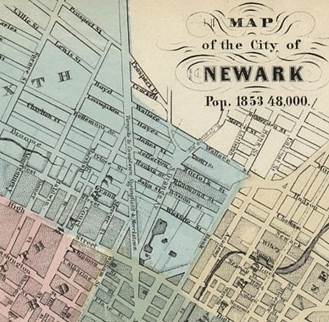
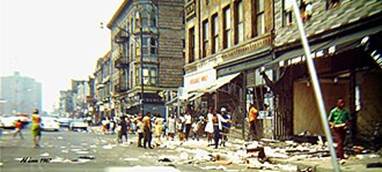

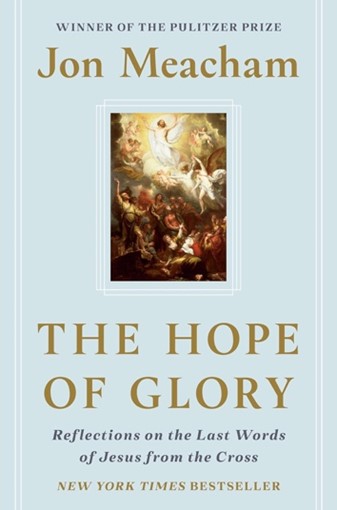
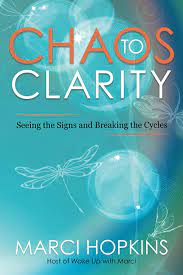
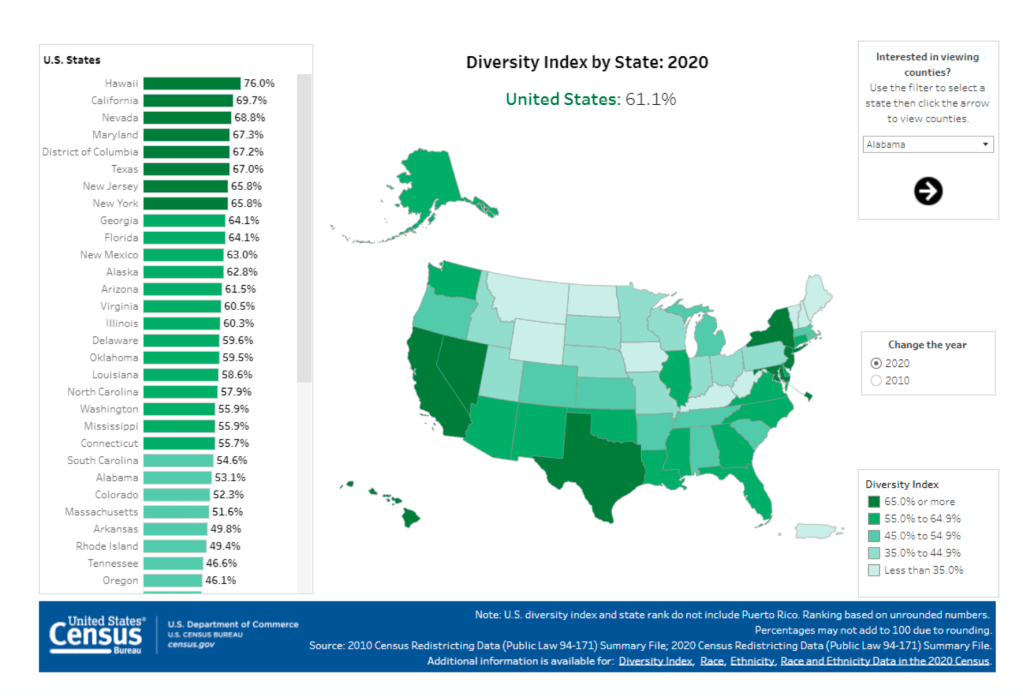
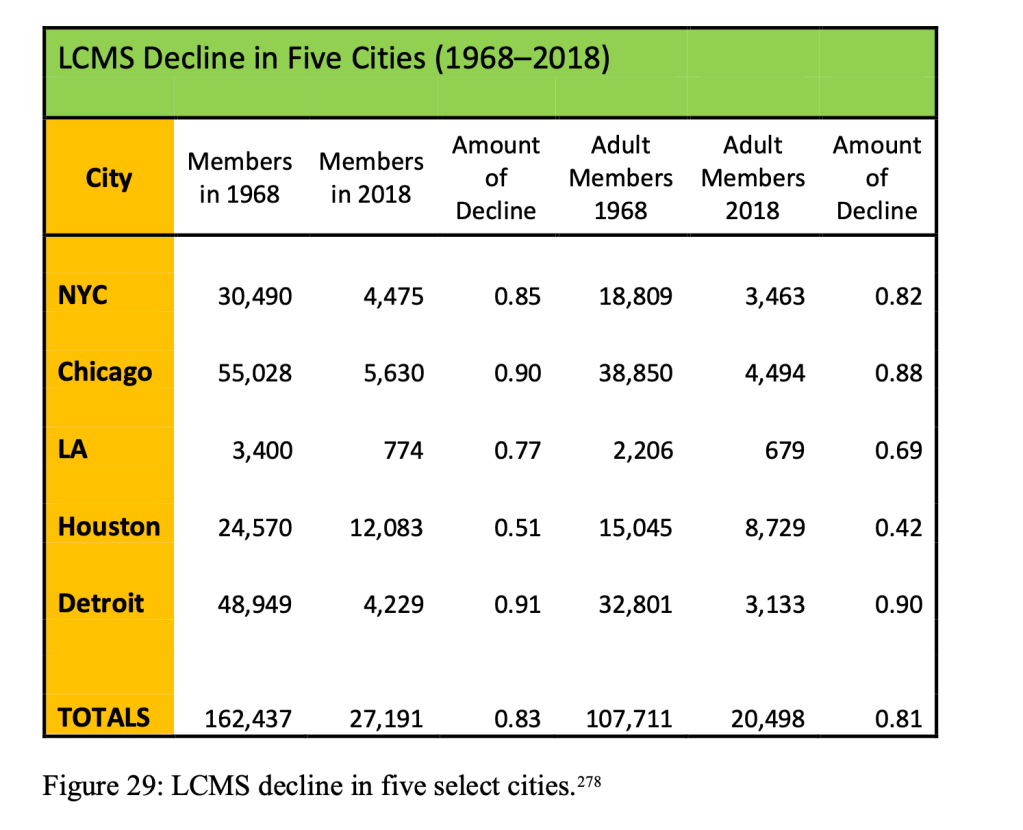


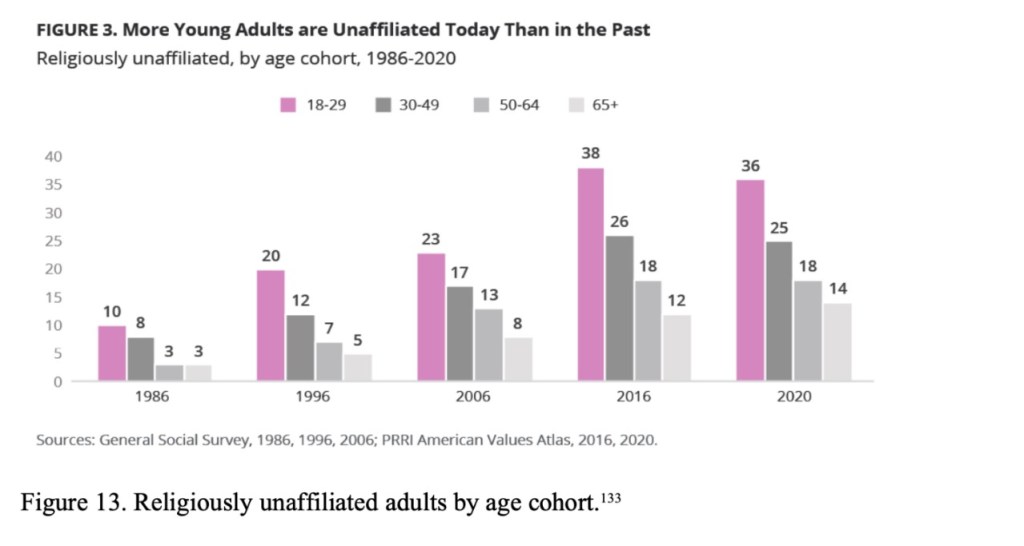


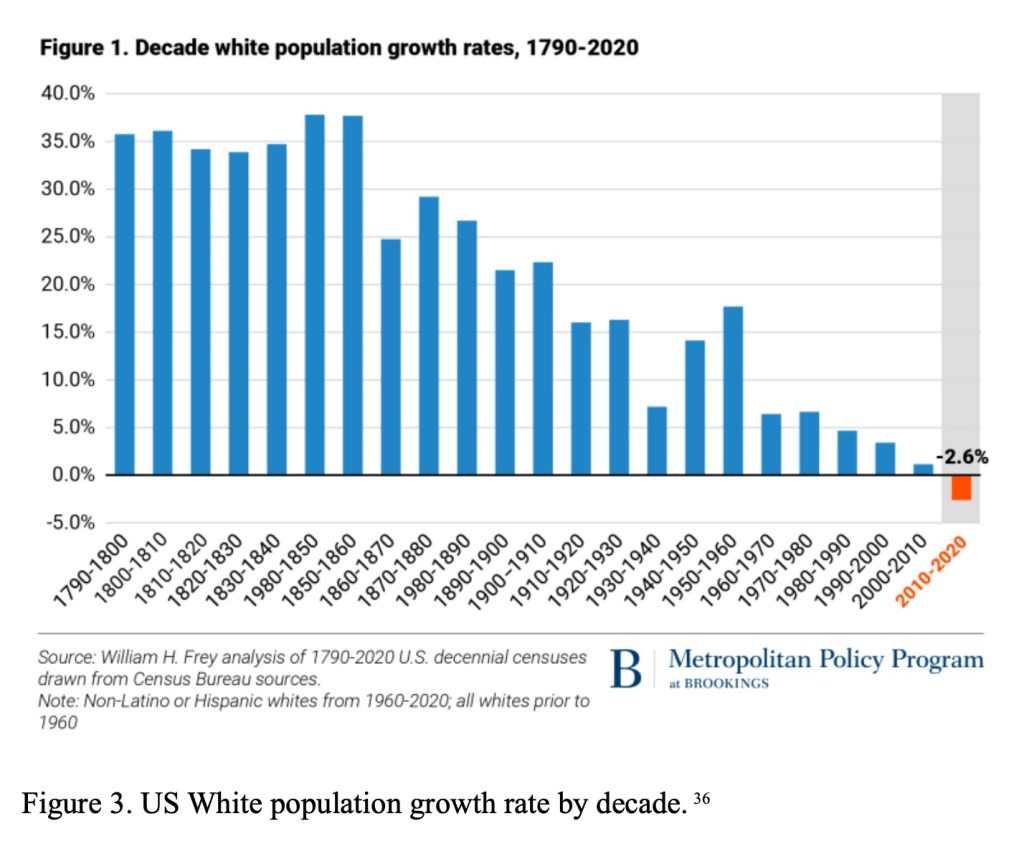


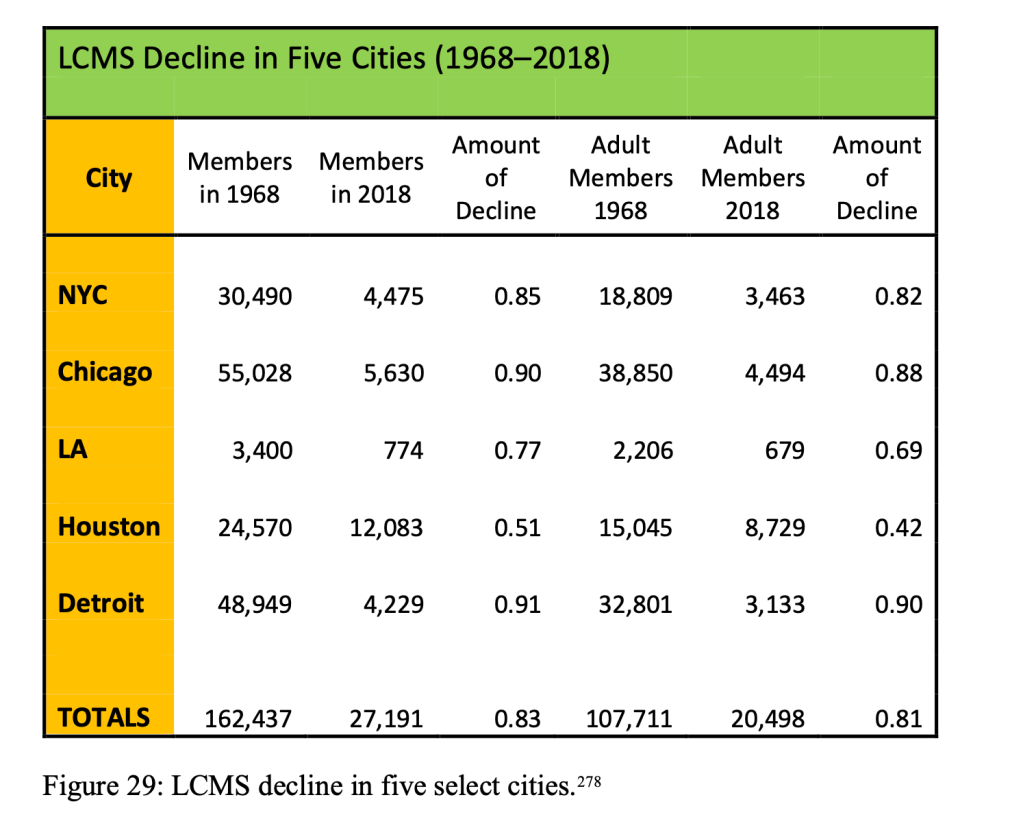
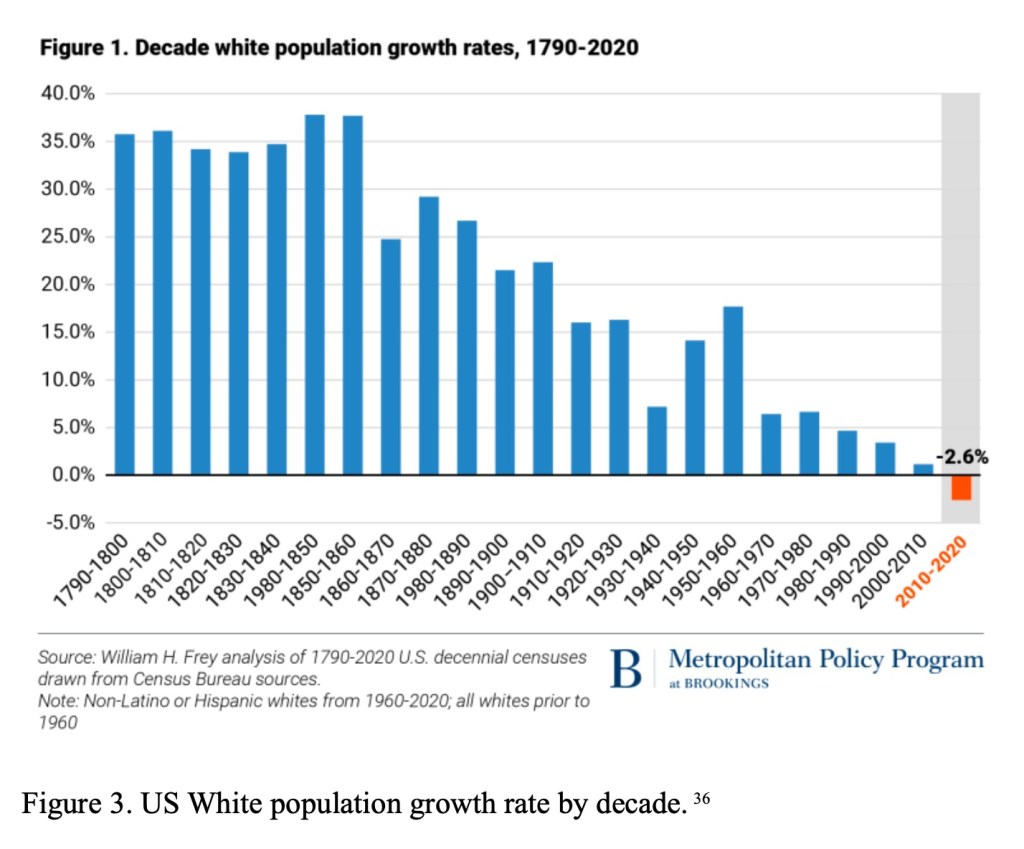








 Bible 500